Historidex / Topics / Ancient Rome facts
Ancient Rome Facts, Photos and Objects, with sources
These ancient Rome facts each come with a real object, site or early photograph from a museum or library. The Ancient Rome pack has 64 cards so far, from A Roman Eagle With Garnet Eyes (100 BCE to 100 CE) to Segovia's Aqueduct Built Without Mortar (1900 to 1910). You collect them in the app by opening the pack.
Free for iPhone. No account, no ads.
- Real photos and films from public archives, each with a link to its source.
- Ten stories make a day, about ten minutes.
- Free to download, with no account and no ads.
Ancient Rome facts from public archives
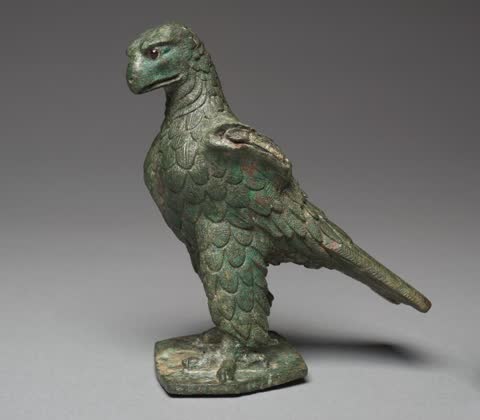 A Roman Eagle With Garnet Eyes100 BCE to 100 CE · Syria, Roman Empire
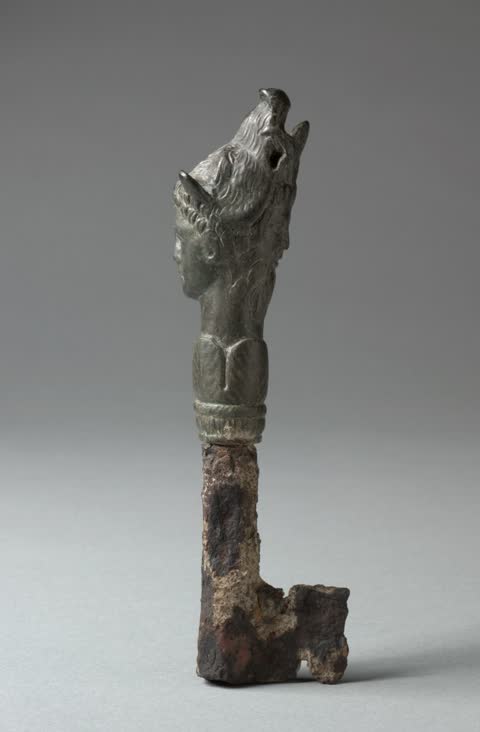 A Roman Key With Three Heads1 to 100 CE · Italy, Roman Empire
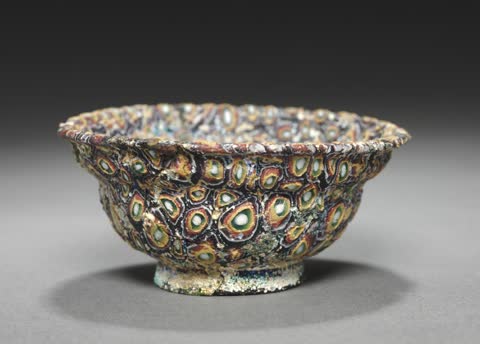 A Roman Bowl of a Thousand Flowers1 to 100 CE · Italy, Roman Empire
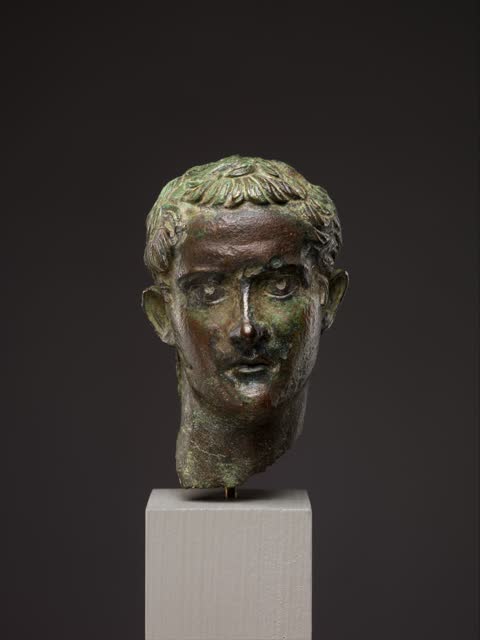 Caligula, Cast Small in Bronze37 to 41 CE · Rome, Roman Empire
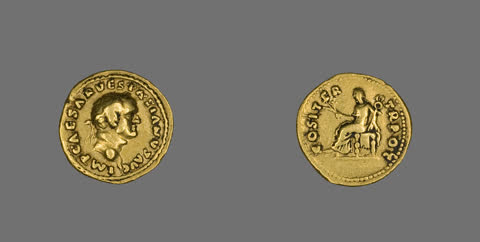 Vespasian's Gold Coin of Peace70 CE · Roman Empire
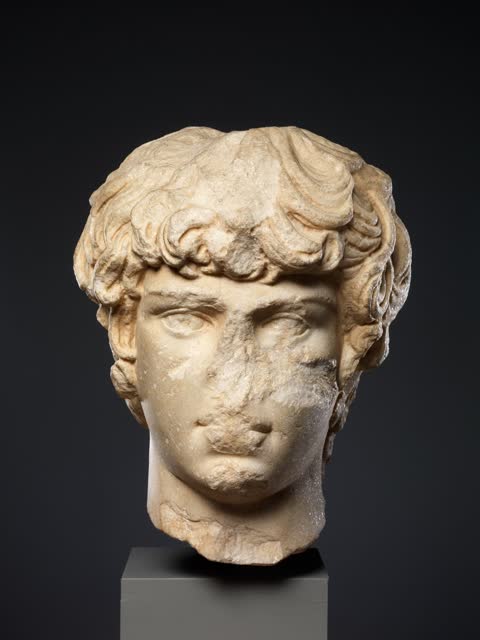 Antinous, Lost in the Nile130 to 138 CE · Roman Empire
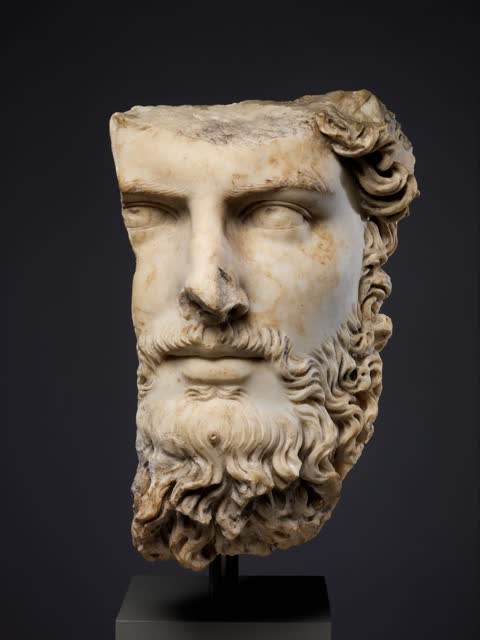 Lucius Verus, One of Two Emperors161 to 169 CE · Roman Empire
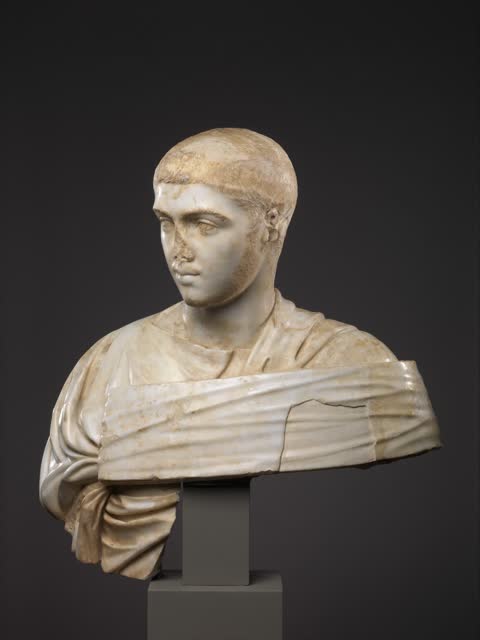 Severus Alexander, Emperor at 13230 to 235 CE · Roman Empire
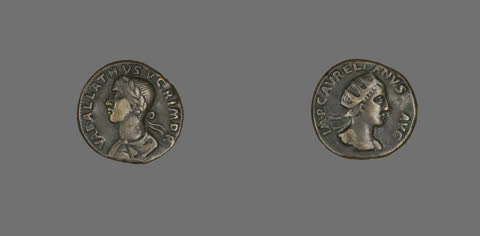 A Coin With Two Rulers271 to 272 CE · Roman Empire
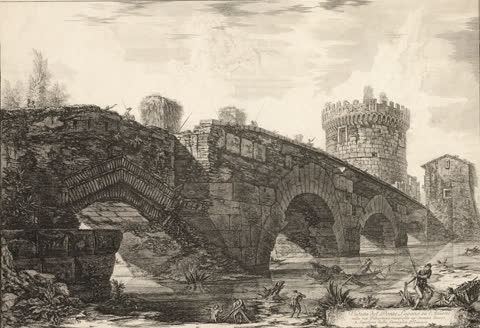 Piranesi's Roman Bridge Near Tivoliabout 1763 (edition published 1800 to 1807) · Near Tivoli, Italy
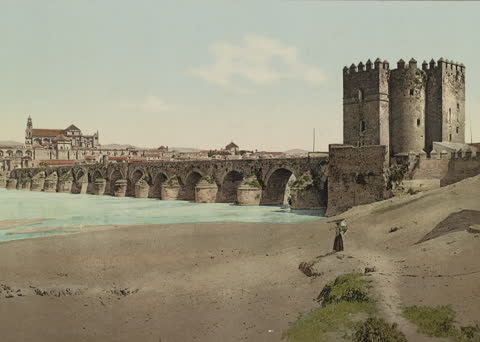 Cordoba's Bridge, Mostly Rebuilt1890 to 1906 · Cordoba, Spain
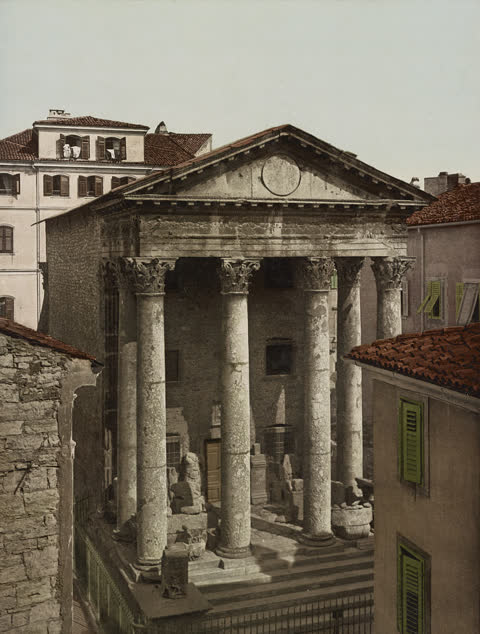 The Temple of Augustus at Pula1890 to 1906 · Pula, Croatia (Roman Pietas Iulia)
All 64 cards
- A Roman Eagle With Garnet Eyes 100 BCE to 100 CE, Syria, Roman Empire
- A Painted Bedroom in a Roman House 50 to 40 BCE, Boscoreale, near Pompeii, Roman Empire
- Caesar's Portrait Two Years After His Death 42 BCE, Rome
- A Bronze Hercules, 14.5 Centimeters Tall 30 BCE to 20 CE, Rome, Roman Empire
- Augustus in 4 Centimeters of Ivory 27 BCE to 14 CE, Roman Empire
- A Roman Key With Three Heads 1 to 100 CE, Italy, Roman Empire
- A 1.6 Centimeter Bronze Mouse 1 to 200 CE, Rome, Roman Empire
- A Bronze Foreigner, Probably a Dacian 1 to 100 CE, Rome, Roman Empire
- A Roman Household God in Bronze 1 to 25 CE, Rome, Roman Empire
- A Roman Bowl of a Thousand Flowers 1 to 100 CE, Italy, Roman Empire
- A Wolf Head Like Caligula's Ship Fittings 1 to 100 CE, Near Rome, Roman Empire
- A Drunk Silenus on a Couch Armrest 1 to 125 CE, Italy, Roman Empire
- Livia, Wife of Augustus 14 to 37 CE, Rome, Roman Empire
- Caligula Honors His Mother on a Coin 37 to 41 CE, Rome
- Caligula, Cast Small in Bronze 37 to 41 CE, Rome, Roman Empire
- A Winged Victory From a Roman Chariot 40 to 68 CE, Rome, Roman Empire
- A Gold Coin for Claudius's Britain Campaign 46 to 48 CE, Rome, Roman Empire
- A Bronze Lamp Topped by Jupiter mid 1st century CE, Roman Empire
- Fountain Spout Said to Be From Pompeii 1st century CE, Pompeii, Italy (said to be)
- Octavia, Nero's First Wife 50 to 70 CE, Rome, Roman Empire
- A Glass Cup Naming Its Gladiators 50 to 80 CE, Roman Empire
- Vespasian's Gold Coin of Peace 70 CE, Roman Empire
- A Roman Era Brooch With Enamel Inlay 100 to 300 CE, Gaul or Roman Britain
- A Tiny Sea Horse in Gold 100 to 200 CE, Italy, Roman Empire
- A Two Faced Glass Flask 100 to 400 CE, Roman Empire
- Antinous, Lost in the Nile 130 to 138 CE, Roman Empire
- Marciana, Trajan's Sister 130 to 138 CE, Roman Empire
- A Roman Floor With an Egyptian Scene 130 to 150 CE, Prima Porta, near Rome, Roman Empire
- Antoninus Pius on a Coin From Bulgaria 138 to 161 CE, Nicopolis ad Istrum, Moesia Inferior (now Bulgaria)
- Faustina's Gold Coin and Her Forum Temple 141 to 161 CE, Roman Empire
- A Hunt Cup Piped On by Hand mid 2nd century CE, Cologne, Roman Germany
- Marcus Aurelius Before He Was Emperor 153 to 154 CE, Rome
- Lucius Verus, One of Two Emperors 161 to 169 CE, Roman Empire
- An Empress, Probably Faustina Minor about 165 CE, Roman Empire
- A Gold Necklace With a Commodus Coin 200 to 300 CE, Alexandria, Roman Egypt
- A Bear That Carried Bath Oil 200s CE, Italy, Roman Empire
- Caracalla Gave Nearly All Free People Citizenship 212 to 217 CE, Roman Empire
- Severus Alexander, Emperor at 13 230 to 235 CE, Roman Empire
- Balbinus, Emperor for Three Months about 238 CE, Rome, Roman Empire
- Gordian III, Emperor at 13 239 CE, Rome
- Trebonianus Gallus, 2.4 Meters of Bronze 251 to 253 CE, Roman Empire
- A Coin for the Divine Mariniana 254 CE, Rome
- A Coin With Two Rulers 271 to 272 CE, Roman Empire
- Aurelian's Gold Lion Coin 272 CE, Roman Empire
- Constantine's Coin in a Gold Pendant 324 to 326 CE, Late Roman Empire, Eastern Mediterranean
- Constantine, 500 Kilograms of Marble 325 to 370 CE, Rome, Roman Empire
- A Roman Fork With a Mule's Head 375 to 425 CE, Italy, Roman Empire
- Hadrian's Pantheon Dome, Etched by Piranesi 1700s, Rome, Italy
- Piranesi's Roman Bridge Near Tivoli about 1763 (edition published 1800 to 1807), Near Tivoli, Italy
- The Roman Arch of Titus, 1850s 1850s, Roman Forum, Rome, Italy
- Pompeii's Temple of Jupiter in 1851 1851, Pompeii, Italy
- A Paved Road Beside Mamia's Tomb, Pompeii about 1853, Pompeii, Italy
- The Temple of Bacchus at Baalbek 1890 to 1900, Baalbek, Roman Empire (now Lebanon)
- Cordoba's Bridge, Mostly Rebuilt 1890 to 1906, Cordoba, Spain
- Maison Carrée, a Roman Temple Still Standing 1890 to 1906, Nîmes, Roman Gaul (now France)
- Orange's Roman Theatre From Above 1890 to 1900, Orange, Roman Gaul (now France)
- Orange's Roman Arch in Color 1890 to 1906, Orange, France (Roman Arausio)
- The Forum of Pompeii With Vesuvius 1890 to 1906, Pompeii, Italy
- The Temple of Augustus at Pula 1890 to 1906, Pula, Croatia (Roman Pietas Iulia)
- The Roman Baths of Bath, in Color 1890 to 1900, Bath, England (Roman Aquae Sulis)
- Trajan's Column, Topped by a Saint 1890 to 1900, Rome, Italy
- Verona's Roman Arena From Above 1890 to 1900, Verona, Italy
- Segovia's Aqueduct Built Without Mortar 1900 to 1910, Segovia, Spain





Where these cards come from
The credits name the Cleveland Museum of Art (24 cards), the Metropolitan Museum of Art (17 cards), the Art Institute of Chicago (12 cards) and the Library of Congress (11 cards). Each card names its archive record. Every card is checked three times before it is released: once by the writer against at least two sources, then by two independent fact-checkers.
Questions
Where can I see real ancient Roman artifacts?
In the Ancient Rome pack in Historidex. Every card is a real photo or object from a public archive or museum, and names its source.
Is there an ancient Rome app?
Historidex is a history app with a Ancient Rome card pack: 64 cards so far, collected by opening the pack. The cards are separate from the free daily feed of stories.
Where do these ancient Rome facts come from?
The credits name the Cleveland Museum of Art (24 cards), the Metropolitan Museum of Art (17 cards), the Art Institute of Chicago (12 cards) and the Library of Congress (11 cards). Each card names its archive record.
More topics
- Ancient Egypt photos
- Ancient Greece photos
- Gods and Heroes of Greece photos
- Samurai and Edo Japan photos
Also see the history app and historical photos.
Free for iPhone. No account, no ads.